


The Office: Somehow We Manage
3.45.87K Reviews
App Specs
- Version
- 1.46.1
- Updated On
- License
- Free
- Downloads
- 1,000,000+
- Developer
- East Side Games Studio
- Categories
- Simulation
- Platform
- Android
Screenshots

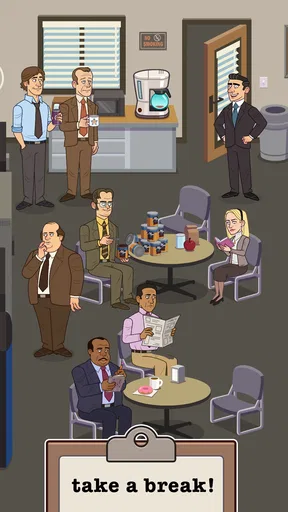

 Analysis by AppCompare
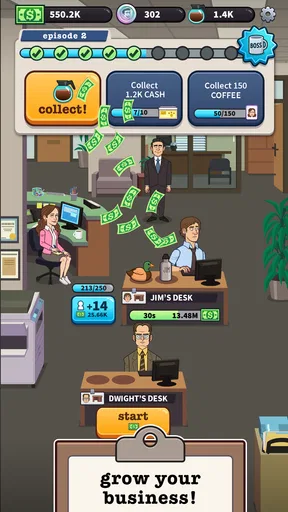
I approached The Office: Somehow We Manage expecting a light workplace-themed time killer, but I quickly found that its appeal depends on how much you enjoy making small decisions repeatedly. This is a free simulation game from East Side Games Studio built around Michael Scott and the Dunder Mifflin Scranton team. Its central idea is simple: help the office generate in-game cash while the business continues moving forward, even when I am not actively tapping every moment.
That simplicity is both its strength and its main limitation. I can open it for a short session, make a few choices, collect progress, and leave without needing a long uninterrupted block of time. At the same time, players looking for a deep management simulator, a story-heavy adaptation, or a game with constant action may find the experience too repetitive. The best way to understand it is as a character-driven idle game where planning the next improvement matters more than mastering complicated controls.
How the office turns small decisions into progress
The first thing I noticed is that the game works best when I stop treating every tap as equally important. The office is not just a screen to clear whenever a reward appears. I have to decide which improvement deserves attention, when to spend accumulated cash, and whether a short burst of activity is worth interrupting whatever else I am doing. That creates a modest but genuine decision space inside an otherwise approachable format.
In practical terms, I found myself thinking in short planning horizons. If I only have a minute, I focus on collecting what is already ready and making the most obvious upgrade. If I expect to return later, I consider which investment should keep the office progressing while I am away. That distinction makes the game more interesting than a simple sequence of taps because the best choice depends on how long I intend to leave it alone.
The Office setting gives those decisions a recognizable personality. Michael Scott and the Scranton staff make the business theme feel lighter than the usual anonymous factory or fantasy kingdom. Even when the underlying activity is familiar for the genre, the connection to the television world gives the progress a little more context. I enjoyed seeing the office as a place I was gradually organizing and improving rather than as a collection of completely interchangeable menus.
Still, the licensed theme does not transform the game into a traditional sitcom adventure. The main pleasure comes from managing progress, not from exploring a large narrative. I would recommend it to someone who likes the characters and also enjoys idle systems, but I would not suggest installing it solely for an extensive story experience. The Office is the flavor around the management loop, not a replacement for that loop.
A useful habit is to decide what kind of session I am having before I begin. For a quick check-in, I avoid spending too much time comparing every possible improvement. For a longer session, I look at the broader effect of my choices and try to avoid scattering resources across changes that do not noticeably improve my next stage of progress. This simple separation between “maintenance” and “planning” helped the game feel less aimless.
Worth Reading Before You Choose

EA SPORTS FC Mobile 26 Is a Bigger Football Game, but It Takes Time

Flipboard Shows What News Apps Must Do Beyond the Feed

Switching to Android Auto Means Rethinking Your Driving Routine

Google Calendar Makes a Crowded Week Easier to Manage

Ludo King Makes the Most of the Minutes Between Plans

Baby Panda World Brings Quick Play to Modern Phones, but Its Game Library Feels Busy
That is also where the game differs from more traditional simulation alternatives. A detailed business simulator usually asks me to manage more variables, respond to changing conditions, and accept the consequences of poor planning. Here, the decisions are lighter and more forgiving. The trade-off is clear: I get an easier game that fits into spare moments, but I give up much of the complexity that would make every decision feel weighty.
Why the idle format suits short everyday sessions
My favorite use case is a short break during a normal day. I can check in while waiting for an appointment, collect what has accumulated, make a sensible improvement, and close the game before it starts demanding more attention than I want to give. It does not require me to remember a complicated control scheme, and the office theme makes the routine feel friendlier than a generic resource dashboard.
The format also suits players who enjoy watching a project grow gradually. I like the feeling of returning to a workplace that has moved forward in my absence, even if the individual step is small. That rhythm encourages regular visits without requiring the commitment of a conventional strategy game. It is particularly comfortable for someone who wants progress to continue in the background rather than someone who wants to actively control every second.
There is a subtle planning advantage in resisting the urge to spend immediately. When I wait long enough to understand what my next goal should be, my resources feel more meaningful. Spending just because something is available can create the illusion of activity without improving my overall position very much. I got better results by treating each purchase as part of a sequence rather than as an isolated reward.
That approach also reduces one of the genre’s common frustrations: opening the game repeatedly without a clear purpose. Before leaving, I try to know what I want to accomplish on my next visit. It might be reaching a particular improvement, building enough cash for a stronger change, or simply collecting and checking the office. Giving each session a small objective makes the idle structure feel more deliberate.
Where the reward loop becomes less comfortable
The reward side of the experience is easy to understand, but it is not always equally satisfying. Early progress feels more active because improvements arrive frequently and the office changes at a comfortable pace. Later, the same routine can feel slower, especially if I am waiting for enough resources to make a meaningful move. That is normal for an idle game, yet it means patience becomes part of the design rather than an occasional inconvenience.
The game is free to download, with optional purchases priced from $0.99 to $99.99 per item. I think that range is important to keep in mind before playing for a long time. A player who is happy to wait can approach the game as a relaxed free experience, while someone who wants to accelerate progress may encounter stronger pressure to spend. I prefer the former approach because paying to shorten a waiting period can reduce the satisfaction of planning around that wait.
I also recommend deciding on a personal spending boundary before the game becomes part of a daily routine. The small purchase can feel harmless in isolation, but idle games are built around repeated returns, so the broader pattern matters more than any single offer. If I am using the game as a casual distraction, I would rather let the office develop at its own pace than turn every delay into a reason to open the purchase screen.
This is one area where a premium simulation game may be a better alternative for some readers. Paying once for a complete experience can feel more predictable if I want to avoid recurring prompts or accelerated progression. On the other hand, a premium title may not offer the same easy, low-commitment check-in style. The better choice depends on whether I value free access and gradual progress more than a cleaner, more controlled economy.
The risk-and-reward balance is therefore modest rather than dramatic. I am not making decisions that destroy the entire office or force me to restart a campaign. The risk is mainly opportunity cost: spend now on a convenient improvement, or wait for something that better supports the next stage. That is enough to create a little thought, but not enough to satisfy players who want serious consequences.
Adapting when the first plan stops working
One of the more useful lessons I took from the game is that a plan should be flexible. A choice that feels efficient at the beginning may become less attractive once progress slows or the office reaches a different rhythm. I learned to stop following one upgrade path automatically and instead reconsider what would make my next session smoother. The game does not need a complicated strategy guide to reward this kind of adaptation.
My practical method is to compare immediate comfort with longer-term momentum. An improvement that makes the next few minutes easier can be worthwhile if I am actively playing. If I am about to leave, I care more about what will help the office continue developing during the gap. Neither option is universally correct; the right answer changes with my available time and current goal.
This is also why I would not play it with the same mindset as a competitive strategy game. I am not trying to outmaneuver another player or discover a single perfect opening. Instead, I am adjusting a routine so that the office keeps moving with as little wasted attention as possible. That makes the game relaxing, but it also limits the excitement of experimentation for players who want surprising counterplay.
Another useful adjustment is learning when not to chase every visible reward. A game like this can make constant activity feel productive, but collecting everything immediately is not always the best use of a session. I found it more satisfying to group actions together, decide what the collected resources were for, and then spend with a clear reason. This creates a small layer of discipline that the basic tapping loop does not provide on its own.
The adaptation process is gentle enough for newcomers. I never felt that I needed specialist knowledge to understand what I was doing. The challenge is not decoding a hidden system; it is paying attention to pacing and resisting impulsive choices. That makes the game approachable for fans of The Office who have little experience with simulation games, while still giving experienced idle players a familiar framework to optimize.
However, experienced players should keep their expectations realistic. The game’s accessibility means that adaptation has a ceiling. Once I understand the main rhythm, there are only so many ways to make the routine more efficient. If I want a simulation with changing markets, complex staffing decisions, or several competing strategies, I would be better served by a more demanding management title.
What remains engaging after the novelty fades
Over time, the question becomes whether the office theme and gradual growth are enough to keep me returning. For me, the answer depends on session length. Short visits remain pleasant because the game does not ask for much preparation. Longer sessions are harder to justify once the basic loop becomes familiar, since the activity can start to feel like checking a progress meter rather than actively managing a workplace.
The character connection helps delay that feeling. Michael Scott and the Dunder Mifflin Scranton setting give the game a warmer identity than an anonymous idle business. I am more willing to tolerate a repetitive action when it is attached to a world I already recognize. Still, familiarity can only carry the experience so far. Players who are not interested in The Office may see the same loop as ordinary idle management with a different visual theme.
The game’s audience size suggests that it has found a substantial group of curious players: it has passed one million installs, and its average rating is 3.4 from around twenty-six thousand ratings. I read that as a sign of a divided experience rather than an automatic recommendation or warning. The concept clearly attracts attention, but the rating also reflects the fact that idle pacing, monetization, and repetition will not suit everyone.
That mixed reception matches my own view. I can understand why a fan would enjoy opening the game every day, yet I can also understand why someone would leave after the initial novelty. The strongest long-term appeal comes from players who already like incremental progress and are comfortable with a relaxed pace. The weakest fit is someone hoping the license will provide constant new scenes, substantial exploration, or a traditional sitcom plot.
There is also a practical question about device compatibility. The game supports Android 7.0 and later, which makes it accessible to people using older Android devices rather than requiring a recent operating system. The current version is 1.46.1, so I would still keep the app updated through the normal store process to receive the version intended for the current release line.
The Teen content rating is another small consideration for families. I would not treat the game as a preschool experience simply because the controls are easy. Parents should use their own judgment about whether the humor, presentation, and optional purchase elements fit the player. For adult fans, the rating is unlikely to be a major obstacle, but it is worth noticing before handing the game to a younger user.
Who should play it and who should choose something else
I think this is a good match for a fan of The Office who wants a low-pressure simulation game that can be checked in short bursts. It is also suitable for someone who enjoys incremental progress but does not want the complexity of a full business-management simulator. The recognizable setting, simple routine, and background progress work well together when the goal is casual entertainment rather than mastery.
I would be more cautious recommending it to a player who dislikes waiting. If progress that pauses between visits feels unsatisfying, the idle structure may become irritating quickly. The same applies to anyone who wants direct control over every employee, detailed financial forecasting, or a campaign shaped by major strategic consequences. This game offers decisions, but they are intentionally lighter than those found in a serious management simulation.
It is also not my first choice for someone seeking a narrative game based on the show. The office atmosphere is present, but the main activity remains resource progression. A story-focused adventure or a more conventional character game would be a better fit for a player who wants dialogue, exploration, and a sequence of memorable plot events rather than an office that gradually becomes more productive.
For a friend asking whether the game is worth trying, my answer would be yes if the friend already enjoys both The Office and idle games. I would explain that the free entry makes it easy to sample, but I would also mention the optional purchases and the possibility of slower progress later. I would suggest playing without spending at first, setting a personal limit, and judging the game by whether the routine itself feels enjoyable.
My most useful advice is to treat the game as a small daily ritual rather than a full evening activity. Open it with a purpose, collect what supports that purpose, make one or two considered improvements, and leave. This keeps the office feeling like a relaxing side project. Trying to force constant excitement from it is what makes the repetition most noticeable.
My strategy verdict on the Scranton idle experience
After spending time with it, I see The Office: Somehow We Manage as a friendly, accessible idle simulation rather than a deep management game. Its best decisions involve timing, patience, and choosing whether to optimize for the next few minutes or the next return visit. Those choices are meaningful enough to prevent the game from being completely automatic, but they remain forgiving and easy to understand.
The strongest trade-off is between convenience and depth. I can enjoy it in spare moments with very little mental overhead, yet that same simplicity limits how much strategic variety the game can sustain. The Office theme improves the presentation and gives the routine personality, but it cannot remove the genre’s natural repetition. I found the experience most successful when I accepted that it was designed for gradual progress, not constant discovery.
The free price makes trying it straightforward, while the in-app purchase range means I would approach the economy thoughtfully. I would not install it expecting every delay to disappear, and I would not recommend spending simply because a wait feels inconvenient. The game is more rewarding when I let planning and patience do the work, especially during the early period when each improvement is easy to appreciate.
Overall, I would recommend it selectively. Fans of the show who like idle games should find a comfortable way to spend a few minutes at a time, and casual simulation players may appreciate the approachable office setting. Players who want demanding strategy, a substantial story, or a purchase-free progression model should look elsewhere. Its real strength is not complexity; it is turning a familiar workplace into a low-pressure routine with just enough planning to keep me coming back.
My final advice is to download it with modest expectations, play through the opening rhythm, and pay attention to how you feel during the waiting periods. If checking on the Scranton office feels satisfying, the game can become an easy companion for short breaks. If the progress loop already feels repetitive, the familiar characters probably will not change your mind for long. That honest test tells me more than the license alone: this is a pleasant idle game for the right player, not a universal substitute for every kind of simulation.
Pros
- Faithfully captures the show’s humor
- characters
- and familiar Scranton setting.
- Short play sessions make it easy to check progress throughout the day.
- Many character interactions include amusing references for longtime fans.
- Simple controls and clear objectives are welcoming to casual players.
- Regular tasks provide steady goals beyond the main office upgrades.
Cons
- Progress can become heavily dependent on waiting or spending premium currency.
- Repeated tasks may feel monotonous after the novelty of the office wears off.
- Some upgrades offer limited visual changes despite requiring substantial resources.
- The game can consume considerable battery during longer active sessions.
- New content may feel less rewarding if you are not familiar with the series.
FAQs for The Office: Somehow We Manage
What is The Office: Somehow We Manage?
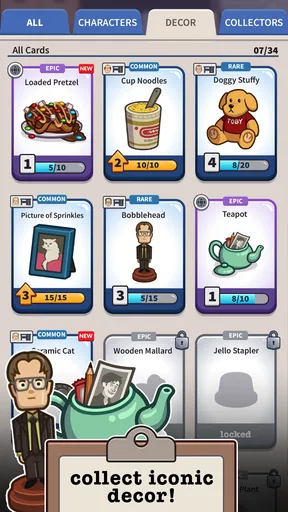
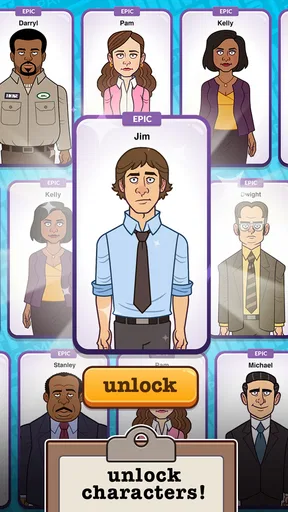
The Office: Somehow We Manage is a casual mobile management game inspired by the American version of The Office. You take charge of Dunder Mifflin’s Scranton branch, upgrade desks and departments, complete office tasks, and unlock familiar characters from the show. Its presentation uses recognizable humor, locations, and story moments, making it especially appealing to fans who enjoy light strategy and idle-style progression.
How does the gameplay work in The Office: Somehow We Manage?
The game combines idle management, resource collection, character upgrades, and short missions. You assign employees to activities, earn in-game currency, improve different parts of the office, and progress through episodes or story objectives. Much of the income can accumulate while you are away, although returning regularly is useful for collecting rewards, activating bonuses, and completing tasks more efficiently.
Is The Office: Somehow We Manage free to download and play?
The Office: Somehow We Manage is generally available as a free-to-download game, but it includes optional in-app purchases. These purchases can provide premium currency, bundles, boosts, or other conveniences that speed up progress. You can play without paying, although advancement may feel slower during longer sessions. It is a good idea to review your device’s purchase restrictions before handing the game to younger players.
Does The Office: Somehow We Manage require an internet connection?
An internet connection is normally recommended, and some features may require the game to connect to its servers. Online access can be needed for advertisements, cloud-related functions, events, purchases, and account or progress verification. Basic parts of the game may sometimes load offline, but availability can vary after updates. For the most reliable experience, launch and play it while connected to Wi-Fi or mobile data.
Is The Office: Somehow We Manage suitable for fans of the TV series?
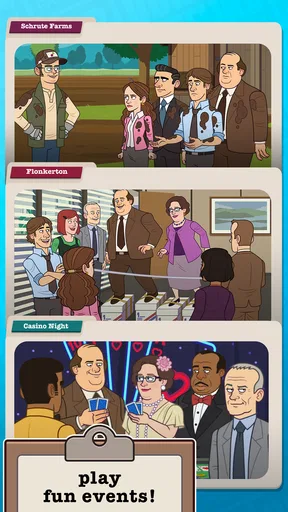
The game is primarily designed for viewers who already know and enjoy The Office. It includes recognizable characters, office settings, jokes, and situations that reflect the show’s style, so fans will likely get more from the references and character interactions. However, it is not a full replacement for watching the series, and players who prefer action-heavy or deep strategy games may find its relaxed, repetitive management format less engaging.


